
In This Article
- What Are The Median Home Prices In Thousand Oaks, Los Angeles, and San Fernando Valley in 2026?
- How Much Space Does $1 Million Buy In Each Area?
- What Lifestyle And Community Advantages Come With Your $1 Million?
- How Are Market Conditions Affecting Each Area Right Now?
- Frequently Asked Questions About Million Dollar Homes In These Markets
When home prices Conejo Valley vs LA are running closer than ever before, understanding exactly what your million-dollar budget delivers becomes crucial for smart buyers. In February 2026, the median home price in Thousand Oaks sits at $1.0 million , creating a rare market moment where suburban tranquility costs almost exactly what many LA neighborhoods demand. This comprehensive analysis examines precisely what you receive for your investment in each market, backed by current data that reveals surprising shifts in Southern California's housing landscape. The convergence of these price points creates unique opportunities and challenges. Los Angeles median home prices currently stand at $1.0 million , while San Fernando Valley properties show a median listing price of $1.25 million . These numbers tell only part of the story, however. The true value proposition lies in understanding space, lifestyle, commute realities, and long-term market fundamentals that separate these seemingly similar price points.$1.0M$1.0M$1.25MThousand OaksLos AngelesSan Fernando ValleyMedian Home Prices February 2026
Source: Redfin, Movoto, February 2026
For $1 million in February 2026, buyers get approximately 1,855 square feet in Thousand Oaks at $539 per square foot, 1,580 square feet in Los Angeles at $633 per square foot, or 1,290 square feet in San Fernando Valley at $774 per square foot.
Key Takeaways
- In February 2026, median home prices are $1.0 million in Thousand Oaks, $1.0 million in Los Angeles, and $1.25 million in San Fernando Valley.
- A $1 million budget buys approximately 1,855 square feet in Thousand Oaks, 1,580 square feet in Los Angeles, or 1,290 square feet in San Fernando Valley.
- Price per square foot varies significantly: $539 in Thousand Oaks, $633 in Los Angeles, and $774 in San Fernando Valley.
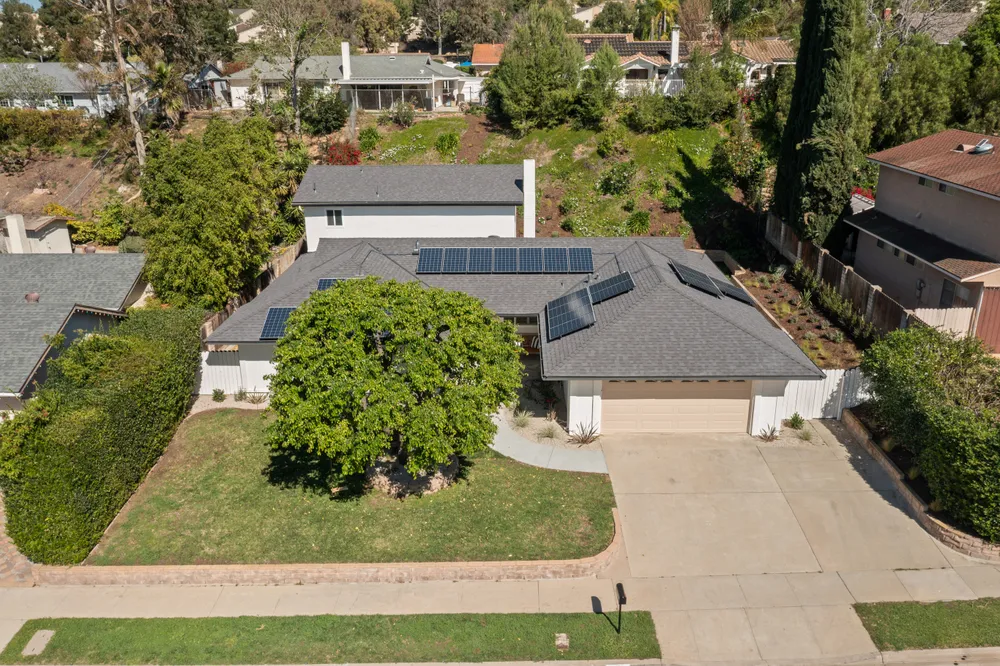
- Thousand Oaks properties typically include private driveways, landscaped yards, and proximity to hiking trails like those in Wildwood Regional Park.
Quick Answer
For $1 million in February 2026, buyers get approximately 1,855 square feet in Thousand Oaks at $539 per square foot, 1,580 square feet in Los Angeles at $633 per square foot, or 1,290 square feet in San Fernando Valley at $774 per square foot.
What Are The Median Home Prices In Thousand Oaks, Los Angeles, and San Fernando Valley in 2026?
Current market data shows Thousand Oaks median home prices at $1.0 million in February 2026, with properties from Movoto listing at $992,000 . This represents a significant shift from historical norms where Conejo Valley commanded substantial premiums over city properties. Price per square foot in Thousand Oaks averages $539, according to Redfin market data, providing important context for value comparisons. Los Angeles city proper shows median sale prices of $1.0 million, with some sources reporting up to $1.05 million depending on specific neighborhoods included in calculations. The price per square foot in LA runs significantly higher at $633 , immediately highlighting the space trade-off buyers face when choosing city living over suburban alternatives. San Fernando Valley presents the most complex pricing scenario. Current median listing prices reach $1.25 million with price per square foot averaging $774 , making it the most expensive of the three markets per dollar invested. However, this reflects the Valley's position as a middle ground between urban convenience and suburban space. The convergence of Thousand Oaks and LA prices represents a fundamental market shift. Conejo Valley median prices have remained relatively flat, bouncing between $1.1M and $1.2M annually, with data as of February 2026 showing $1.116 million . This stability contrasts sharply with LA's ongoing volatility, creating opportunities for strategic buyers.
How Much Space Does $1 Million Buy In Each Area?
Space calculations reveal dramatic differences in what your million-dollar investment delivers. In Thousand Oaks, $539 per square foot translates to approximately 1,855 square feet for your million-dollar budget. This typically means a 3-4 bedroom single-family home with a yard, garage, and the suburban amenities Conejo Valley residents expect. Los Angeles buyers face a different reality. At $633 per square foot , your million dollars purchases roughly 1,580 square feet. While this reduction might seem modest, the practical implications prove significant. LA properties often maximize lot coverage, meaning smaller yards, attached garages, and closer proximity to neighbors. The trade-off provides urban walkability and cultural access that suburban buyers sacrifice. San Fernando Valley's $774 per square foot delivers only 1,290 square feet for the same investment, but location context matters enormously. Valley properties often occupy larger lots than comparable LA homes, and many neighborhoods offer the best of both worlds: more space than central LA with easier access to employment centers than Thousand Oaks provides.
| Market | Median Price | Price per Sq Ft | Space for $1M | Days on Market |
|---|---|---|---|---|
| Thousand Oaks | $1,000,000 | $539 | 1,855 sq ft | 44 days |
| Los Angeles | $1,000,000 | $633 | 1,580 sq ft | |
| San Fernando Valley | $1,250,000 | $774 | 1,290 sq ft | 62 days |
The space advantage extends beyond square footage to lifestyle elements. Thousand Oaks properties typically include private driveways, landscaped yards, and proximity to hiking trails like those in Wildwood Regional Park. Valley homes often provide pools and outdoor entertainment spaces that LA city properties cannot accommodate due to lot constraints.
What Lifestyle And Community Advantages Come With Your $1 Million?
Lifestyle value proves difficult to quantify but enormously important to long-term satisfaction. Thousand Oaks delivers the quintessential Southern California suburban experience. Your million-dollar investment provides access to top-rated schools, low crime rates, and a genuine small-town community feel despite being part of a larger metropolitan area. Local amenities in Thousand Oaks include beloved spots like Conejo Coffee in Newbury Park, where the Conejo Loco Bowl and Horchata Iced Latte have earned devoted followings among locals. The area's numerous Coffee Bean & Tea Leaf locations provide consistent quality, while restaurants like The Stonehaus in nearby Westlake Village offer vineyard dining experiences impossible to replicate in denser urban settings. Los Angeles million-dollar properties deliver cultural immersion and urban convenience. Walking access to restaurants, theaters, museums, and nightlife creates lifestyle value that suburban areas cannot match. The trade-off involves accepting higher density, parking challenges, and the everyday realities of city living that some buyers find energizing while others find exhausting. San Fernando Valley occupies the middle ground, offering suburban-style homes with relatively easy access to LA employment centers. Neighborhoods like West Hills, Woodland Hills, Encino, and Sherman Oaks remain in strong demand , providing larger homes than comparable LA properties while maintaining reasonable commute times to major job centers. For families prioritizing schools, Thousand Oaks delivers exceptional value. The area's educational system consistently ranks among California's best, providing long-term value that extends well beyond the initial home purchase. This factor alone often justifies the space and location trade-offs for buyers with school-age children.
How Are Market Conditions Affecting Each Area Right Now?
Current market dynamics reveal significant differences in buyer behavior and seller positioning across these three markets. Thousand Oaks homes receive an average of 2 offers and sell in around 44 days , indicating a balanced but still active market where properly priced homes move efficiently. Los Angeles properties receive 3 offers on average but take 80 days to sell , suggesting buyer selectivity and potentially unrealistic seller pricing in certain submarkets. This extended timeline creates opportunities for patient buyers willing to navigate longer negotiation processes. San Fernando Valley inventory shows 62 average days on market , falling between the other two markets and reflecting the area's position as a compromise choice for many buyers seeking space without complete suburban isolation. Inventory levels tell important stories about future price movements. Thousand Oaks shows 444 active listings, up 23% from the same period in 2025, with homes taking 65 days to sell versus 50 days in November 2025 . This shift toward a more balanced market benefits buyers who felt shut out during the peak frenzy years. The broader economic context influences all three markets. Interest rates expected to average 6.0% in 2026 continue affecting affordability calculations, particularly for buyers stretching to reach million-dollar price points. However, mortgage rates anticipated to dip to 6.1% later in 2026, according to Freddie Mac projections, may provide relief for qualified buyers. For buyers considering these markets, timing strategy becomes crucial. The current environment rewards preparation and market knowledge over speed of execution. [How to Win a House in the 2026 Conejo Valley Market Without Overpaying: Strategy Guide for Smart Buyers](/how-to-win-house-2026-conejo-valley-market-without-overpaying-strategy-guide-smart-buyers) provides detailed tactics for navigating competitive situations while maintaining financial discipline.
Frequently Asked Questions About Million Dollar Homes In These Markets
Which area offers the best investment potential for long-term appreciation?
Thousand Oaks historically shows steady appreciation with lower volatility than Los Angeles properties. The suburban market tends to hold value during downturns while providing consistent growth over time. Los Angeles offers higher potential returns but with greater risk and market swings. San Fernando Valley properties often mirror broader LA trends while providing more space for the same investment.
What are the total monthly costs of owning a $1 million home in each area?
Beyond mortgage payments, property taxes vary significantly. Ventura County (Thousand Oaks) typically runs lower property tax rates than Los Angeles County, according to the Ventura County Assessor. However, utilities, maintenance costs, and insurance may favor LA properties due to smaller lot sizes and newer construction standards. [Complete Guide to Closing Costs in Ventura County 2026: Hidden Fees Every Buyer Should Know](/complete-guide-closing-costs-ventura-county-2026-hidden-fees-every-buyer-should-know) provides detailed cost analysis for Thousand Oaks buyers.
How do commute realities affect the true cost of each location?
Thousand Oaks residents often face 45-60 minute commutes to LA job centers, adding significant time and transportation costs. Los Angeles properties may eliminate commute time but often require parking expenses and urban transportation costs. San Fernando Valley offers compromise positioning but can still involve substantial commute times depending on specific job locations and neighborhood choices.
Which market is most likely to see price corrections in the next 2-3 years?
Market predictions suggest Thousand Oaks prices may show more stability due to limited inventory and consistent demand from families prioritizing schools and space. Los Angeles faces greater volatility from interest rate changes and economic conditions. The convergence of prices creates unique opportunities for buyers willing to research specific neighborhoods rather than relying on broad market generalizations.
Thinking About Buying or Selling in Thousand Oaks?
Davis Bartels and the DB Real Estate Group have helped 500+ families navigate the local market since 2009. Whether you're exploring your options or ready to make a move, reach out for a no-pressure conversation about your goals.
Contact Davis: davisbartels.com
