
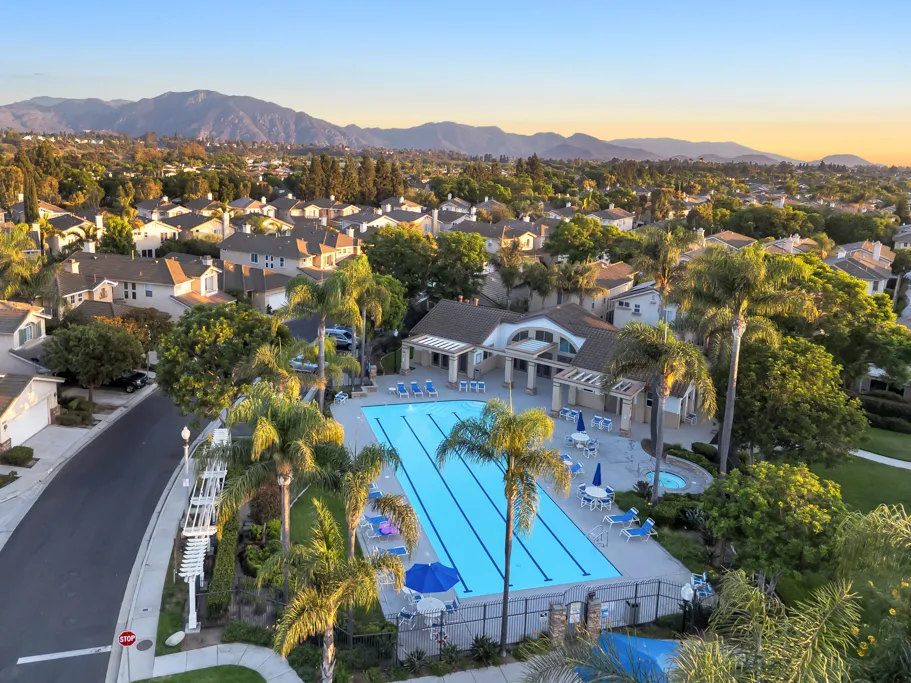
If you've been watching Conejo Valley home prices 2026 , you've seen the numbers that stopped many buyers in their tracks. The March 2026 median home price came in at $1,167,500, and the market behind that number does not behave the way the rest of the region does. While Los Angeles County prices dropped slightly, the Conejo Valley maintained its premium, raising the question every buyer and seller is asking: what's really driving these values? The answer isn't found in headlines about market crashes or rate predictions. It's in the supply data: a valley with essentially no land left to build on, a November 2025 count where active listings were up 23% yet homes took 65 days to sell, and a corner of Ventura County that keeps tracking differently from the rest of the region. Those forces matter more than any rate forecast if you're deciding when to make a move.
Source: MLS data, Redfin, CAR, March 2026
Key Takeaways
- Conejo Valley median home prices reached $1,167,500 in March 2026, maintaining a $200,000+ premium over Los Angeles County's $905,000 median.
- No available land remains for building in Conejo Valley, with future development limited to rental apartments and minimal single family home parcels.
- Active listings rose 23% to 444 homes in November 2025, but selling time stretched to 65 days as expired listings jumped 49%.
- Mortgage rates dropped to 6.1% in January 2026 from 6.8% the previous year, with expectations of averaging 6.0% throughout 2026.
- Westlake Village commands $1,300,000 to $1,500,000 median prices while Thousand Oaks ranges from $1,100,000 to $1,200,000 with faster market times.
Conejo Valley's median home price reached $1,167,500 in March 2026, a $200,000+ premium over Los Angeles County's $905,000 median. The primary driver is a land shortage: no available parcels remain for single family construction, limiting future development to rental apartments. Active listings rose 23% to 444 homes in November 2025, yet days on market increased to 65 as expired listings jumped 49%.
The answer isn't found in headlines about market crashes or rate predictions. It's in the data that shows why the Conejo Valley has no available land to build on , why active listings increased 23% but homes still take 65 days to sell , and why this unique corner of Ventura County continues to defy broader market trends. Understanding these forces isn't just useful for making decisions about timing, it's essential for anyone considering their next move in this market.
What is the median home price in the Conejo Valley in 2026?
The March 2026 numbers paint a clear picture of where the Conejo Valley stands. The median home price came in at $1,167,500, continuing a pattern where prices bounce between $1.1M and $1.2M from year to year. That is a 6.6% decline year over year, but the context matters more than the direction. Within the Conejo Valley, pricing varies significantly by city and neighborhood. Thousand Oaks ranges from $1,100,000 to $1,200,000 with 30-40 days typical market time , while Westlake Village commands $1,300,000 to $1,500,000 with 35-45 days on market . Some early 2026 snapshots put the Westlake Village townwide median closer to the mid-$1.5M range, with premium enclaves reaching well above that. The most striking aspect isn't the absolute numbers but the size of the premium. Los Angeles County home prices were down 1.4% from last year, selling for a median price of $905K according to Redfin, and even with the Conejo Valley's own year over year dip, the gap between the two markets held. This $200,000+ gap reflects supply and demand dynamics that have held through very different rate environments.
The most striking aspect isn't the absolute numbers but their stability. While Los Angeles County home prices were down 1.4% compared to last year, selling for a median price of $905K , the Conejo Valley maintained its significant premium. This $200,000+ gap reflects fundamentally different supply and demand dynamics that have persisted regardless of interest rate environments or broader economic conditions.
Why is the housing shortage driving Conejo Valley home prices up?
The inventory story in the Conejo Valley defies simple explanations about market cycles. There is essentially no land left to build on in the Conejo Valley, a constraint that separates this market from most others facing affordability challenges. Recent meetings with Thousand Oaks' economic development analyst revealed future building plans focus only on rental apartment buildings, with just a couple parcels for single family homes that won't make a difference in inventory . The late 2025 numbers set the stage. November 2025 ended with 444 homes for sale, up 23% from the prior November, but the increase did not translate into buyer relief. It took 65 days on average to sell a home that month, up 29% from a year earlier. (The table below shows how those figures had shifted by March 2026.) More listings plus longer selling times points to a pricing gap: expired listings were up 49%, 55 unsold homes versus 37 a year earlier, which tells you sellers and buyers were not agreeing on value. The demographic pressure amplifies the supply constraint. Millennials make up 31% of the population and almost half of all homebuyers according to the National Association of Realtors , while people are living longer and staying in their homes longer . Many homeowners are still sitting on ultra-low pandemic-era rates, which has kept inventory from exploding, though there's a slow but noticeable uptick in new listings as life events override the "I love my 3% rate" mindset .
| Metric | March 2026 | March 2025 | Change |
|---|---|---|---|
| Active Listings | 397 | 415 | -4.3% |
| New Listings (Monthly) | Down 20% | Baseline | -20% |
| Days on Market | 51 | 35 | +45.7% |
| Expired Listings | 55 | 37 | +48.6% |
| Months of Inventory | 3.0 | 2.7 | +11.1% |
Current inventory levels tell the immediate story. November ended with 444 homes for sale, up 23% from last November , but this increase hasn't translated to buyer relief. It took 65 days on average to sell a home in November, up 29% from last November . The apparent contradiction between more listings and longer selling times reflects a market where expired listings were up 49% from last year to 55 unsold homes versus 37 last year, indicating a divide between what sellers want and what buyers are willing to pay .
How are mortgage rates affecting Conejo Valley buyers in 2026?
Rates in early 2026 gave Conejo Valley buyers a mixed picture. Mortgage rates ended January at approximately 6.1%, down from 6.8% last year and the lowest in 3 years according to Freddie Mac . As of this writing, forecasts called for rates to average about 6.0% in 2026, with Fannie Mae anticipating a drift into the high 5s. However, the rate improvements haven't triggered the buyer surge many expected. First time home buyers continue to face the most headwinds with affordability and job security concerns , while homes that appeal to move-up buyers are often the homes selling the fastest . Rates land differently on each buyer segment when the median home price sits near $1.2 million. The practical impact shows in buyer behavior. In spring 2026, well-priced homes were selling the first weekend with multiple offers and packed open houses, but if the price did not match the condition, buyers were not making lowball offers and battling it out. They simply moved on. The biggest challenge is with townhomes and condos, where communities with high HOAs struggle to find buyers when looking at $600+ a month in HOA fees on top of already high mortgage payments .
The interest rate environment in 2026 created a complex backdrop for Conejo Valley buyers. Mortgage rates ended January at approximately 6.1%, down from 6.8% last year and the lowest in 3 years . Interest rates are expected to average 6.0% in 2026 , with Fannie Mae anticipating rates to drop to the high 5s in 2026 .
The practical impact shows in buyer behavior. Recent weeks have shown homes selling in the first weekend with multiple offers and packed open houses , but if the price doesn't match the condition, buyers aren't making lowball offers and battling it out, they're just moving on . The biggest challenge is with townhomes and condos, where communities with high HOAs struggle to find buyers when looking at $600+ a month in HOA fees on top of already high mortgage payments .
What makes Conejo Valley home prices more resilient than Los Angeles County?
The Conejo Valley has tended to outperform the broader market because demand is steady and supply is capped, a pattern that held even as Los Angeles County sales volume slowed into 2026. Location does a lot of the work. Demand is driven by lifestyle, schools, and proximity to Los Angeles, and the land to add meaningful supply is not there. Westlake Village sits approximately 38 miles from Downtown Los Angeles, close enough for commuting yet far enough to offer a more relaxed pace of life . Schools are a steady source of demand, with Oaks Christian High School, Fusion Academy, and White Oak Elementary among the names buyers ask about. These quality-of-life factors maintain buyer interest even when broader market sentiment weakens. The luxury segment shows particular strength. Average sale price is up 5% and total dollar volume rose 14%, showing healthy buyer demand especially in the $1.5M+ category . From North Ranch to Lake Sherwood to Westlake Island, luxury remains in demand especially with relocating professionals, coastal retirees, and cash-rich investors .
The Conejo Valley's price resilience stems from factors that distinguish it from broader Los Angeles County trends. The Conejo Valley often outperforms the broader market due to strong demand and limited housing supply , a pattern that continued even as Los Angeles housing sales volume is trending into a slower pace for 2026 .
Geographic advantages play a significant role. Market dynamics continue to reflect a blend of long-term desirability, limited land for new construction, and strong demand driven by lifestyle, schools, safety, and proximity to Los Angeles . Westlake Village sits approximately 38 miles from Downtown Los Angeles, close enough for commuting yet far enough to offer a more relaxed pace of life .
Safety and schools create sustained demand pressure. Westlake Village has a violent crime rate 74% lower than the California average , while education is served by highly-rated institutions like Oaks Christian High School, Fusion Academy, and White Oak Elementary . These quality-of-life factors maintain buyer interest even when broader market sentiment weakens.
How do Conejo Valley prices compare to surrounding areas in 2026?
The Conejo Valley's premium becomes clear when comparing 2026 prices across the region. Depending on the source, Los Angeles County shows a median of roughly $895,000 to $942,000 and the City of Los Angeles about $1.0 million. The Conejo Valley median sits more than $200,000 above the county figure. Within Ventura County, the differences are stark. Camarillo ranges from $900,000 to $1,000,000 with 28-38 days market time , while Ventura runs $850,000 to $950,000 with 32-42 days . Simi Valley shows $800,000 to $900,000 median range, with well-priced listings still seeing strong weekend traffic but homes testing the top of the range closing closer to fair market value after inspections and concessions . The premium reflects tangible differences in lifestyle and amenities. Westlake Lake and nearby Lake Sherwood create a true waterfront lifestyle with boating, private docks, and panoramic water views, with shoreline and lake-adjacent homes sitting in a distinct, higher-priced submarket . Select lakefront estates have been marketed in the eight-figure range, such as a Lake Sherwood new-construction listing offered at $12.9M in late 2025, showing how location on the water plus new construction places a property in a different pricing tier . The comparison extends beyond raw prices to market dynamics. Thousand Oaks shows median 34 days on market, suggesting realistically priced homes are still moving at a healthy pace, with turnkey condition and strong micro-location remaining the biggest drivers of speed and final price . This contrasts with Los Angeles County averaging 56 days on market and the City of Los Angeles specifically averaging 61 days .
The Conejo Valley's premium becomes clear when comparing 2026 prices across the region. While Los Angeles County shows a median of approximately $895,000 to $942,000 and the City of Los Angeles specifically shows approximately $1.0 million , the Conejo Valley consistently commands 15-20% higher prices.
Frequently Asked Questions About Conejo Valley Home Prices
Will Conejo Valley home prices drop significantly in 2026?
The California Association of Realtors forecasts home prices to increase approximately 3.6% in 2026, with the Conejo Valley often outperforming the broader market due to strong demand and limited housing supply . Prices can and do fluctuate, and the 6.6% year over year dip in March shows that. Sharp drops have been uncommon here, though no forecast is a guarantee, so the more useful question is usually whether a specific home works for you at today's price.
How much should I expect to pay beyond the purchase price in the Conejo Valley?
Beyond your down payment, buyers should plan for inspections, non-recurring closing costs typically running about 1-3% of the purchase price, and recurring closing costs usually adding another 1-1.5% for prepaid expenses such as interest, property taxes, and homeowners insurance . On a $1,200,000 purchase (roughly the Conejo Valley median), those percentages add up quickly on top of a 20% down payment, so build them into your budget early. Your lender can give you a line by line estimate.
Why are Conejo Valley prices so much higher than the rest of Ventura County?
The premium reflects several factors: median household income of nearly $189,000, well above both state and national averages, persistent low inventory against steady demand, and a low-density, suburban feel. The area also benefits from unique amenities like waterfront living and proximity to both Los Angeles and natural recreation areas.
Is now a good time to buy in the Conejo Valley?
Buyers should expect more options and more breathing room in 2026: prices are unlikely to fall much, but you are more likely to have time to think, negotiate, and decide without feeling rushed. Think long term. Timing the market is more luck than strategy, so buy when your finances and life are ready rather than waiting on a dip in rates.
Thinking About Buying or Selling in the Conejo Valley?
Davis Bartels and DB Real Estate Group have closed 500+ transactions in the local market since 2009. If any of this applies to your situation, happy to talk it through, no pressure.
Contact Davis: davisbartels.com
